
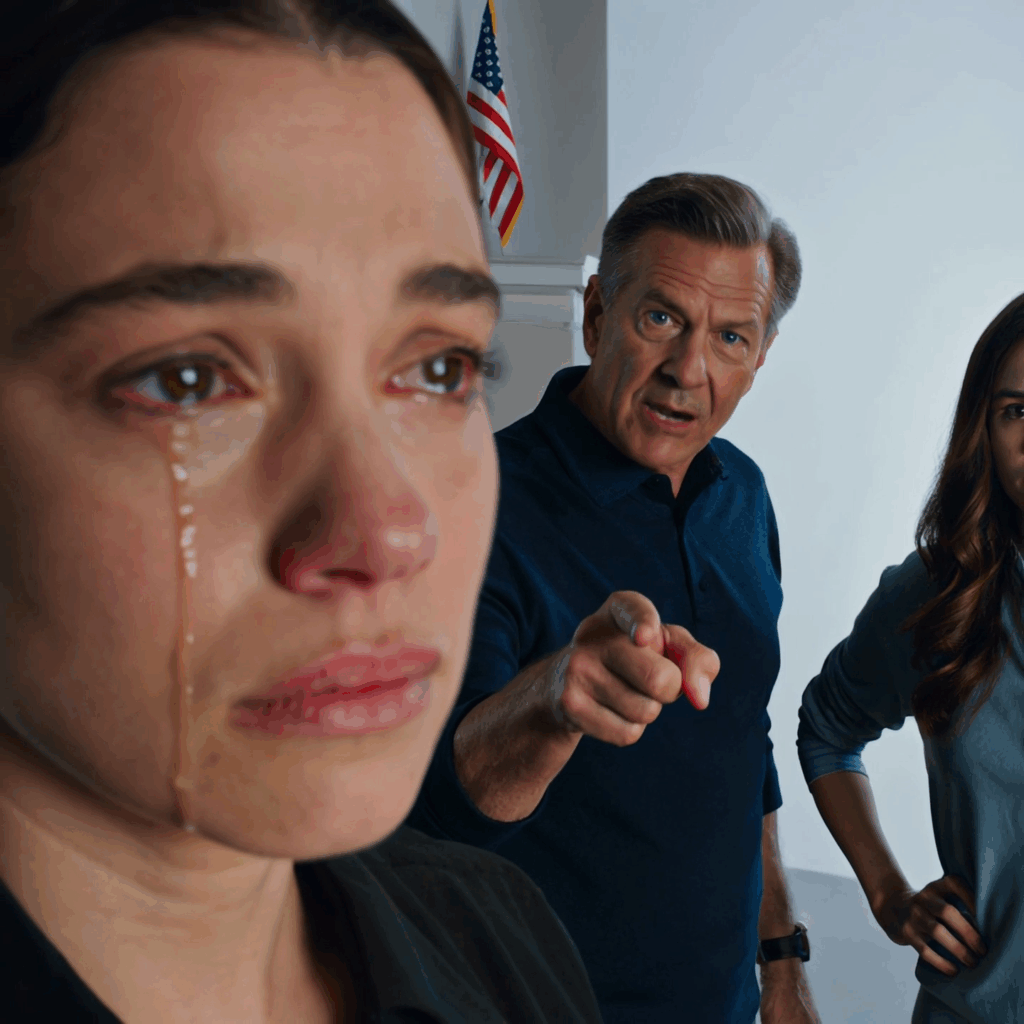
My parents canceled my wedding because my sister wasn’t getting enough attention. They said I needed to be more understanding and let her have the spotlight for once. Mom added, “Some daughters just need to learn about family sacrifice.” Dad nodded. “Real sisters know when to step aside.” So I packed my bags that same night with nothing but my fiancé and a dream. A year later, I’d built a life they never thought I could. But when my sister found out how happy I’d become, her jealous breakdown exposed every lie my parents had ever told.
The venue was booked. Marcus and I had paid the deposit from our savings. My dress hung in my old bedroom closet at my parents’ house, wrapped in protective plastic that crinkled every time I visited and walked past it. Three months before what should have been the happiest day of my life, I sat at my parents’ kitchen table watching my mother’s mouth form words that didn’t make sense.
“We need to talk about postponing,” she said, not meeting my eyes.
My father stood behind her, arms crossed, jaw set in that familiar way that meant the decision had already been made. Madison, my younger sister by three years, sat in the corner, scrolling through her phone, a small smile playing at her lips.
“Postponing what?” I asked, though dread had already started pooling in my stomach.
“The wedding, sweetheart.” Mom’s voice dripped with false sympathy. “Madison’s been having such a hard time lately. She feels overshadowed. The therapist says she’s experiencing real trauma from always being in your shadow.”
I stared at her. “Madison’s in therapy?”
“Started two weeks ago,” Dad chimed in. “Doctor says she’s got severe anxiety related to sibling rivalry. Says she needs family support right now. Not a big event that makes her feel inadequate.”
The absurdity of it hit me like cold water. Madison had never been in anyone’s shadow. She’d been homecoming queen, captain of the dance team, voted Most Likely to Succeed in our high school yearbook. She’d gotten a car for her sixteenth birthday while I’d saved up for my own at nineteen. She’d had her college fully paid for while I’d worked two jobs to afford state school.
“So you want me to postpone my wedding because Madison feels sad?” I kept my voice steady, trying to understand the logic.
“Not postpone.” Mom finally looked at me. “Cancel. Just for now. Maybe in a year or two when Madison’s in a better place mentally.”
Marcus and I had been together for four years. We’d saved $15,000 for this wedding. My parents had promised to contribute another $5,000 for the catering—money they said they’d already set aside. We’d planned every detail, sent the invitations, arranged the rehearsal dinner. My best friend Ashley had already bought her plane ticket from Seattle.
“You’re joking.” But I could see from their faces they weren’t.
Madison finally looked up from her phone. “It’s not personal, Emma. I just can’t handle being around something so triggering right now. My therapist says I need to prioritize my mental health.”
“What’s triggering about my wedding?” I demanded.
She shrugged. “Seeing you get everything you want while I’m struggling. It’s not fair that you get to be happy when I’m suffering.”
The twisted logic made my head spin. “You’re not suffering. You just got promoted at work. You bought a new condo. You went to Cancun last month.”
“Material things don’t equal happiness,” she said, using the practiced tone of someone quoting self‑help books. “You wouldn’t understand because you’ve always had emotional stability. Some of us aren’t that lucky.”
I turned to my mother. “Tell me you don’t actually believe this.”
Mom reached across the table, but I pulled my hand away. “Emma, honey, you need to be more understanding. Madison needs this. She needs to feel like the family prioritizes her for once. You’ve always been the strong one, the independent one. You can handle this disappointment. But Madison—she’s fragile right now.”
“I’m not fragile,” Madison snapped. “I’m dealing with real psychological damage. There’s a difference.”
Dad cleared his throat. “Some daughters just need to learn about family sacrifice. That’s what makes a real family work. Give and take. You’ve been taking a lot lately, Emma. Time to give back.”
The comment stung because it was so fundamentally untrue. I’d given constantly. I’d babysat Madison throughout high school so Mom and Dad could have date nights. I’d helped her with college applications, driven her to parties, covered for her when she snuck out. I’d loaned her money she never paid back and listened to hours of drama about boys who didn’t text back.
“Real sisters know when to step aside,” Dad continued. “That’s what your mother and I are asking you to do here. Step aside. Let Madison have the spotlight for once.”
“The spotlight?” As if my wedding was some kind of performance designed to steal attention rather than a commitment I was making to the man I loved. “What spotlight?” I asked. “She’s not getting married. There’s no event she’s planning that mine would overshadow.”
“That’s exactly the problem,” Mom said quietly. “She doesn’t have anything coming up. No boyfriend, no engagement, no big life events. And here you are—rubbing your happiness in her face.”
Something cold settled in my chest. “So I’m supposed to cancel my wedding because Madison is single?”
“You’re being selfish,” Madison’s voice rose. “This is typical Emma behavior. Everything always has to be about you. God forbid I ask for one thing, one simple thing. But no, you can’t even do that, because you’re too busy being the perfect daughter with the perfect life.”
I looked at each of their faces. My mother’s expression pleaded for compliance. My father showed disappointment that I wasn’t immediately agreeing. Madison showed something darker, something triumphant.
“I’m not canceling my wedding,” I said. The temperature in the room dropped ten degrees.
“Then we’re not paying for it,” Dad said flatly. “We promised you $5,000 for the catering. Consider that offer rescinded. We’ll be putting that money toward Madison’s therapy fund instead.”
“And you’re not welcome at Sunday dinners anymore,” Mom added, her voice hardening. “Not until you can show your sister the respect she deserves.”
Madison leaned back in her chair, that small smile growing larger. “Guess you’ll have to choose between having a family and having a wedding.”
I stood up so fast my chair scraped against the floor. My hands shook, but I kept my voice level. “I choose both. I’m having my wedding with or without your permission. And if that means I don’t have you as family anymore, maybe you were never really my family to begin with.”
“Don’t be dramatic,” Mom said—but uncertainty flickered across her face.
“I’m done.” The words came out clearer than I expected. “I’ve spent twenty‑eight years trying to make you all happy, trying to be small enough that Madison could shine, trying to convince myself that your love was worth fighting for. But you just told me to cancel the most important day of my life because my sister can’t handle seeing me happy. So I’m done fighting.”
I walked out of that kitchen and drove straight to the apartment Marcus and I shared. He was on the couch watching a game, and when he saw my face, he immediately turned off the TV.
“What happened?”
I told him everything—every word, every demand, every insult disguised as concern. When I finished, he was quiet for a long moment.
“So we’re doing this without them,” he finally said. It wasn’t a question.
“I don’t have $5,000 to replace what they’re taking back.”
“Then we have a smaller wedding, or we elope, or we go to the courthouse and have a party later. I don’t care, Emma. I care about marrying you. The rest is just details.”
I started crying then—but they were different tears than I’d expected. Not sad tears. Relieved tears, because for the first time in my life, someone was choosing me first—without conditions or caveats.
That night, I packed two suitcases with my essential belongings. I left behind photo albums, yearbooks, childhood mementos. I took my laptop, my work clothes, my documents, and my grandmother’s necklace that had been left to me directly in her will so my parents couldn’t claim it. The dress I left hanging in the closet. It felt cursed now anyway.
We got married three months later at a small ceremony in Marcus’s brother’s backyard. Twenty people attended. Ashley flew in from Seattle and stood as my maid of honor. Marcus’s college roommate Jeffrey was best man. We exchanged vows under a simple wooden arch decorated with wildflowers that Ashley and I had picked that morning. I wore a simple white dress I bought off the rack for $200. It fit perfectly.
My parents didn’t call. Madison didn’t text. Radio silence—as if I’d been erased from their lives the moment I stopped being useful.
The wedding itself was beautiful in ways the planned version never would have been—intimate, real, full of people who actually cared about us rather than guests invited out of obligation. We served barbecue instead of a sit‑down dinner, played music from Marcus’s iPhone instead of hiring a DJ, and danced under string lights until midnight. It was perfect.
What I didn’t expect was how the absence of my family would create a strange kind of presence. During the ceremony, I kept glancing toward the empty chairs where they should have been sitting. When Marcus’s mother dabbed her eyes with a tissue during our vows, I felt the hollow space where my own mother should have been crying. His father clapped Marcus on the back afterward with genuine pride, and I physically ached for a moment I’d never have with my own dad.
But then Ashley squeezed my hand and whispered, “You look so happy it’s actually ridiculous.” And I realized she was right. Despite everything, despite the gaping absence of the people who’d raised me, I was radiantly, completely happy.
Marcus’s family embraced me with a warmth that felt foreign. His mother, Patricia, had pulled me aside a week before the wedding with an envelope containing $1,000. “For your dress,” she’d said simply. “Every bride deserves to feel beautiful.” I cried in her arms. This woman who barely knew me—who owed me nothing—yet gave freely what my own mother had withheld.
His father, Robert, walked me down the aisle. I’d initially planned to walk alone, making some symbolic statement about independence, but he’d offered so gently I couldn’t refuse. “Only if you want,” he’d said, “but it would be my honor.” The word honor had broken something in me. My own father had made my wedding about honor, too—but his version required me to dishonor myself.
The reception stretched late into the evening. Marcus’s college friends told embarrassing stories that made me laugh until my stomach hurt. Ashley gave a toast about how she’d watched me shrink myself for years—making myself quieter and smaller and less vibrant—and how Marcus had somehow reversed that process. “He didn’t just love Emma,” she said, glass raised. “He loved her loud. And she finally felt safe enough to match his volume.”
Jeffrey, the best man, told a story about Marcus calling him at two in the morning after our third date, drunk on cheap wine and possibility. “He said, ‘I’m going to marry her,’” Jeffrey recounted. “And I said, ‘Dude, you’ve known her for three weeks.’ And Marcus said, ‘Doesn’t matter. I just know.’” The crowd laughed, but Marcus caught my eye across the dance floor and mouthed, I knew—with such certainty that I felt it in my bones.
We spent our wedding night in a bed‑and‑breakfast forty minutes away, too exhausted to consummate anything except our commitment to sleeping fourteen hours straight. In the morning, we woke tangled in sheets that smelled like lavender, and Marcus pulled me close.
“No regrets?” he asked.
“Only that we didn’t do this sooner.”
He kissed my forehead. “We did it exactly when we needed to.”
The honeymoon was three days in a cabin two hours north. Nothing fancy, just isolation and each other. We hiked trails that wound through dense forest, cooked simple meals on a propane stove, and sat on the porch watching fog roll across the lake. At night, we’d lie in bed listening to rain on the tin roof, and I’d marvel at how quiet my mind had become. For years, my thoughts had been a constant loop of worry about my family: had I done enough, said the right thing, made Madison feel sufficiently special, kept my parents proud? The mental load of managing everyone else’s emotions had been exhausting in ways I hadn’t recognized until it stopped.
Now, lying next to Marcus in the darkness of that cabin, I felt an absence that was actually relief. No one needed anything from me except what I freely chose to give. No one was measuring my success against someone else’s insecurity. No one was keeping score.
“What are you thinking about?” Marcus asked, his voice sleep‑rough.
“How quiet it is inside my head now.”
He pulled me closer. “Good quiet or bad quiet?”
“The best quiet. Like someone finally turned off a radio I didn’t know was always playing.”
On our last day in the cabin, we took a canoe out onto the lake at sunrise. The water was glass‑smooth, reflecting pink clouds and dark treelines. Marcus paddled while I sat in front, trailing my hand in water so cold it made my fingers ache.
“I was scared, you know,” I said, breaking the silence. “That maybe they were right. That choosing you over them made me selfish. And now—now I think staying would have made me a coward.” I watched my hand create ripples that spread wider and wider. “I think they wanted me to be a coward. It’s easier to control people when they’re afraid.”
Marcus stopped paddling, letting us drift. “You’re the bravest person I know, Emma. Leaving took more courage than staying ever would have.”
When we returned to our apartment after the honeymoon, the reality of what I’d done hit harder. Someone had left a card on our doorstep. Inside was a generic congratulations message signed by my grandmother’s sister, Ruth, who lived three states away. At the bottom, she’d written, “Your grandmother would be proud of you.”
I hadn’t thought about Grandma Helen in months. She died two years earlier, before Marcus and I had gotten engaged. She’d been the only person in my family who’d ever asked me what I wanted instead of telling me what I should want. Her funeral had been the last time I’d felt completely connected to my family, all of us unified in grief. Now, I wondered what she’d think of how things had unraveled. Would she have understood my choice? Or would she have urged me toward reconciliation—toward swallowing pride for the sake of family unity?
But then I remembered something she’d said to me once when I was maybe sixteen and upset about some slight from Madison. We’d been sitting on her porch shelling peas into a metal bowl and I’d been crying about feeling invisible.
“Emma, honey,” she’d said, not looking up from her work, “some people will only love you if you stay small enough not to block their light. Those aren’t your people. Your people will bring their own lamps and help you shine brighter.”
I’d tucked that memory away as a nice sentiment, but now it hit differently. Grandma Helen had seen the dynamic. She’d known what I was up against, and she’d tried in her gentle way to warn me.
I put Ruth’s card on our refrigerator, held up by a magnet shaped like a pineapple that Ashley had brought back from Hawaii. It stayed there for months, a reminder that I wasn’t completely severed from every branch of the family tree. Some roots ran deeper than manipulation.
The months after were harder. I’d catch myself reaching for my phone to call my mom about something small, then remember we weren’t speaking. Holidays felt hollow. I spent Thanksgiving with Marcus’s family—kind, but not mine. Christmas morning, I woke up crying, mourning traditions I’d never realized I’d miss. But I also felt lighter, freer—like I’d been carrying a weight I didn’t know existed until I’d set it down.
Marcus and I had both been working in marketing. Me for a local agency and him for a tech startup. Six months after the wedding, his company went through a major funding round and offered him a significant promotion with a salary increase that made my eyes water. He took it, and suddenly our finances went from comfortable to genuinely secure.
I decided to take a risk I’d been contemplating for years. I left my agency job and started freelancing, building my own client base. The first three months were terrifying. I made barely enough to cover groceries, but I was stubborn and I’d learned something valuable from cutting off my family: I could survive harder things than I thought possible. By month four, I’d landed a major client who needed a complete brand overhaul. They paid me more for that single project than I’d made in three months at my old job. By month six, I had a waiting list. By month nine, I was hiring a virtual assistant to help manage inquiries.
We bought a house. Nothing fancy, but it was ours. Three bedrooms, a fenced backyard, a kitchen with granite countertops that made me feel like a real adult every time I cooked dinner. I painted the spare bedroom a soft yellow and set up my home office. Marcus converted the garage into a gym. We adopted a dog—a goofy golden retriever we named Biscuit—who followed me from room to room while I worked.
We hosted dinner parties for the friend group we cultivated—people who showed up because they wanted to, not because they felt obligated. Life wasn’t perfect. We had arguments about whose turn it was to clean the bathroom and whether we could afford new furniture for the living room. Marcus’s work stress sometimes made him distant. My client deadlines occasionally made me snappy. But we worked through it together like partners actually do.
I thought about my family less and less. When I did, it was with a strange detachment—like remembering characters from a book I’d read years ago.
Then came the Instagram message. I hadn’t blocked my family on social media—just removed them from my followers and stopped following them back. I’d made my account public because most of my posts were professional anyway, related to my marketing work. I figured they’d lose interest eventually. But apparently Madison had been watching me through a secondary account with some generic username I hadn’t recognized, tracking my posts for months.
The message arrived from that fake account on a Wednesday afternoon while I was responding to emails. It was long, rambling, and increasingly unhinged:
“I can’t believe you’re living like this while I’m barely surviving. Do you even know what you’ve done to this family? Mom cries every day about you. Dad won’t talk about you at all. And me? I’ve had to deal with their grief on top of my own problems. But sure, go ahead and post pictures of your perfect house and your perfect dog and your perfect life. Really nice, Emma. Really mature. You always have to win, don’t you? You always have to be the success story. Well, guess what? Your success is built on abandoning your family, on being selfish, on choosing a man over your own blood. I hope you’re happy with your choices, because you’ve destroyed everyone you left behind. Mom says you’re dead to her now. She literally said, ‘I don’t have that daughter anymore.’ And you know what? I agreed with her. You’re not my sister. My sister wouldn’t do this. My sister wouldn’t just cut us off because we asked her to make one sacrifice—one. But you couldn’t even do that. You’re a narcissist, Emma. You’re toxic. And everyone here sees it now.”
I read it three times, feeling nothing except mild curiosity about what had triggered this outburst. Then I scrolled back through my recent posts: the house photo from last week, the picture of Biscuit playing in our yard, the anniversary post thanking Marcus for the best year of my life. My happiness had triggered her. My refusal to remain small and struggling had somehow become an offense.
I showed Marcus the message that evening. He read it, face darkening, then handed back my phone.
“You going to respond?”
“What would I even say?”
“Nothing.” He pulled me close. “You don’t owe her anything. Not an explanation, not a defense—nothing. She wanted you to fail without them. The fact that you didn’t makes her look foolish, so she’s lashing out.”
He was right—but the message bothered me in ways I couldn’t articulate. My mother had called me dead to her. My father wouldn’t speak my name. And Madison, who’d supposedly been so fragile and traumatized a year ago, had enough energy to write a multi‑paragraph attack about my Instagram posts.
Two days later, my aunt Carol called. I almost didn’t answer because I assumed she’d been recruited to guilt me into reconciliation, but curiosity won out.
“Emma, honey, I need to talk to you about something.” Her voice sounded strained.
“If this is about Mom and Dad, I really can’t—”
“It’s about Madison—and your parents—and a whole lot of lies that are finally falling apart.”
I sat down. “What are you talking about?”
Carol sighed heavily. “Madison called me yesterday having some kind of breakdown—full‑on hysterical crying. Couldn’t breathe. The works. She was babbling about how everything was ruined and how it wasn’t supposed to happen this way. Took me an hour to calm her down enough to get the actual story.”
“What story?”
“The wedding cancellation was never about her mental health, Emma. It was about money.”
My stomach dropped. “What?”
“Your parents invested in some startup about eighteen months ago with Madison’s boyfriend at the time. Remember Trevor? The guy she was dating who supposedly worked in tech.”
I vaguely remembered him. Tall, talked constantly about Bitcoin and disruption and market opportunities. Madison had brought him around for maybe four or five months before he disappeared from family gatherings.
“They gave him—and Madison—$70,000 to invest in his company. Told them it was guaranteed returns, would triple their retirement fund, the whole pitch. Obviously, it was a scam. The company folded eight months later—right around the time you got engaged. Trevor disappeared with everyone’s money. Your parents lost everything they’d saved for retirement.”
I couldn’t breathe. “Seventy thousand?”
“Every penny they’d saved. They were already struggling financially, but were too proud to tell anyone. When your wedding came up, they panicked. They couldn’t afford to contribute the $5,000 they’d promised you, and they definitely couldn’t show up looking broke when all of Marcus’s family would be there. So Madison suggested they make it about her mental health instead.”
“Madison suggested it.” The words tasted bitter.
“She told me last night that she felt guilty about losing their money. So she offered to be the scapegoat. Play the fragile sister. Give them an excuse to back out gracefully. Make it your fault for being unsympathetic instead of their fault for being broke. She said it seemed like a good solution at the time—everyone saves face—and they figured you’d just postpone a few months and they could figure something out by then.”
“But I didn’t postpone. I left.”
“You left. And then you didn’t come crawling back when things got hard. You actually thrived, which none of them expected. Your mom especially thought you’d fall apart without family support and come begging to reconcile within a few months. When you didn’t—when you got married anyway and started succeeding—it made their whole narrative fall apart.”
I felt dizzy. “What narrative?”
“That you needed them more than they needed you. That you were the difficult one, the selfish one, the one breaking up the family. As long as you were struggling, they could maintain that story. But you’re not struggling. You’re genuinely happy. And Madison can’t stand it because she knows she destroyed your relationship with your parents over her boyfriend’s scam.”
“Where’s Trevor now?”
“No idea. Madison said he vanished after the company folded. Changed his number, deleted his social media—just gone. Your parents filed a police report, but nothing came of it. These investment scams are hard to prosecute—especially when people willingly hand over money. They’ve been drowning in debt ever since, taking out a second mortgage to cover their losses and trying to keep up appearances.”
The pieces clicked into place. The expensive therapy Madison supposedly needed—fabricated to justify why they couldn’t contribute to the wedding. “So there was never any therapist back then.”
“Oh, Madison’s in therapy now. Real therapy—started three months ago when the guilt started eating her alive. But a year ago, when they canceled your wedding? No. That mental‑health crisis was completely made up.”
“She admitted she was the one who suggested it to give your parents a way out of their financial mess without looking bad.”
“And my parents went along with it.”
“They did more than go along with it, Emma. They embraced it. Your mom has been telling everyone in the family that you abandoned Madison during her mental‑health crisis. Your dad’s been saying you were selfish and materialistic—that you chose a wedding over family. I heard it from at least five different relatives over the past year. They’ve been systematically painting you as the villain at every family gathering, every phone call, every chance they get.”
Anger rose in my throat, hot and acidic. “Why are you telling me this now?”
“Because Madison finally broke. She’s been watching you build this life—seeing how happy you are—and it destroyed her. She still follows you, you know. She made a fake Instagram account after you removed her from your followers. Some random username with no profile picture. She’s been obsessively checking your posts for months. Last night, she called me sobbing and confessed everything. Said she couldn’t live with the guilt anymore—that she’d ruined your life over her mistake. I told her she didn’t ruin your life at all—that you seem better off without them—and she completely spiraled.”
“Good.” The word came out harder than I intended.
Carol was quiet for a moment. “Your mom’s been calling me all morning trying to do damage control. Says Madison’s exaggerating—that there’s more to the story—that you were difficult long before the wedding. But I’ve known you since you were born, Emma. You were never difficult. You were accommodating to a fault.”
“What do you want me to do with this information, Carol?”
“Whatever you want. I thought you deserved to know the truth. What you do with it is up to you.”
We said goodbye, and I sat holding my phone for a long time. Biscuit came over and put his head in my lap, sensing my distress. I scratched behind his ears mechanically, mind racing through everything Carol had revealed.
They’d lied. Not just a small lie—but an elaborate fiction designed to make me the villain in a story where I was actually the victim. They’d risked my happiness—my wedding—my future with Marcus—all to avoid admitting they’d been scammed out of their retirement by Madison’s boyfriend. And Madison—the supposedly fragile sister who couldn’t handle seeing me happy—had been the architect of the whole scheme.
I thought about Trevor—this man I’d met maybe four times over the months Madison dated him. He’d always struck me as slightly too polished—his teeth too white, his confidence too rehearsed. He talked about disruption and innovation and first‑mover advantage, using business jargon the way some people use spices—heavily enough to disguise the lack of substance underneath. Madison had been so proud of him. My parents had loved him, too. Both times he came to family dinners, my mother had fawned over his ambition, while my father had nodded approvingly at his firm handshake. I’d found him exhausting but harmless—just another boyfriend in Madison’s pattern of relationships that burned hot and died fast.
I hadn’t known my parents had given him $70,000. I hadn’t known Madison had been involved in the pitch. I certainly hadn’t known the whole thing was a scam that would drain their retirement and set off a chain reaction ending with my wedding cancellation.
But the more I sat with it, the more I understood the money was almost beside the point. They could have told me the truth: We made a bad investment and lost the money we promised you. We’re sorry. Can we contribute in other ways? I would have said yes. I would have understood. Financial mistakes happen. Scams are embarrassing, but survivable. Instead, they constructed an elaborate fiction where I was the problem—where my happiness triggered Madison’s suffering—where my refusal to disappear was somehow an act of aggression.
And even now, a year later, with the truth finally emerging, they still hadn’t called to apologize. My mother’s letter had been more of the same—rewriting history, repositioning themselves as victims of my abandonment.
They’d lied. Not just a small lie—but an elaborate fiction designed to make me the villain in a story where I was actually the victim. They’d risked my happiness—my wedding—my future with Marcus—all to avoid admitting they’d been scammed out of their retirement. And Madison—the supposedly fragile sister who couldn’t handle seeing me happy—had been the architect of the whole scheme.
Part of me wanted to call them, to scream down the phone line—demanding explanations and apologies, to make them admit what they’d done, to force them to acknowledge the damage they’d caused. But another part of me—the part that had grown stronger over the past year—knew that would accomplish nothing. They’d made their choice. They’d picked pride and appearances over honesty and family. They’d thrown me away to protect their egos.
I’d already grieved the family I thought I had. I didn’t need to grieve them again.
Marcus came home that evening to find me cooking dinner. Biscuit at my feet, hoping for dropped food. Music playing from the speaker on the counter. I told him everything Carol had said. He listened, jaw tightening, then pulled me into a long hug.
“I’m sorry,” he said simply.
“I’m not.” I pulled back to look at him. “If they’d just told me the truth, I probably would have postponed or downsized or figured something out. But they didn’t trust me enough to be honest. They chose manipulation instead. And that tells me everything I need to know about who they are.”
“So what now?”
“Now nothing. I’m not reaching out. I’m not explaining that I know the truth. I’m not giving them the satisfaction of knowing they still affect me.”
He nodded. “You’re just going to keep living your life.”
Exactly.
I turned back to the stove, stirring pasta that didn’t need stirring. Madison wanted me to fail without them. She wanted proof that I couldn’t make it on my own—that I’d made the wrong choice leaving. The best revenge I can have is continuing to be genuinely happy. No drama, no confrontation—just success.”
“That’s very mature of you.”
“Don’t give me too much credit. Part of me wants to post increasingly happy photos just to drive her crazy.”
He laughed. “That’s the Emma I married.”
Three weeks later, my mother sent a letter—actual handwritten pages in a cream envelope with my name in her careful script. It arrived on a Saturday, mixed in with credit‑card offers and grocery‑store coupons. I left it sitting on the kitchen counter for two days before opening it.
The letter was six pages long—detailing her side of the story. How worried they’d been about Madison’s mental health. How hurt they were by my abandonment. How family should forgive and move forward. How she wanted to meet Marcus properly and see our house and maybe start rebuilding what we’d lost.
Not once did she mention the money. Not once did she admit to lying. The entire letter operated from the premise that I’d been wrong to leave—that I’d overreacted—that I owed them reconciliation. There was no mention of Trevor, no acknowledgment of the scam, no apology for making me the villain in their story—just six pages of careful manipulation disguised as maternal concern.
I read it twice, then put it through the shredder in my office.
Marcus found me afterward, standing in the yellow room I’d painted, surrounded by the life I’d built without them.
“You okay?” he asked.
“Yeah.” I realized I meant it. “I’m actually really okay.”
“What did the letter say?”
“Nothing that matters.”
He understood. He always understood. That was the difference between chosen family and blood family. One actually saw you; the other just saw the role they wanted you to play.
Madison sent one more message a month later. Shorter this time, less hostile: “I’m sorry. I know that doesn’t fix anything. I know you probably hate me, but I’m sorry anyway. What we did was wrong. What I did was wrong. You deserved better.”
I read it once and then archived the conversation without responding. Sorry wasn’t enough—and even if it were, I didn’t owe her forgiveness just because she finally felt guilty.
Life continued. Marcus got another promotion. I hired two more assistants and started speaking at marketing conferences. We talked about kids—maybe adopting in a few years once we felt ready. We took a trip to Ireland for our anniversary and stayed in a castle that cost more per night than my first month’s rent had been in college.
I posted a photo from the trip—the two of us standing on a cliff overlooking the ocean, wind whipping my hair across my face, both of us laughing at something I couldn’t even remember. I didn’t post it for Madison. I posted it because it was a moment worth remembering—a snapshot of genuine joy. But I knew she saw it. I knew she was still watching.
My phone stayed silent. My parents didn’t call. Madison didn’t send another apology. And slowly, I stopped checking for their reactions—stopped wondering if they’d seen my latest post or heard about my newest client or knew about the house we bought. Their opinions became irrelevant, like background noise I’d learned to tune out.
Ashley flew in to visit one weekend, and we spent Saturday afternoon drinking wine in my backyard while Biscuit chased tennis balls.
“You seem different,” she said, studying me over her glass. “Lighter somehow.”
“I think I am.”
“No regrets about leaving them?”
“Not even one.” I watched Biscuit roll in the grass, paws in the air, completely content. “They wanted me to be small so Madison could feel big. When I refused, they cut me off. But cutting me off freed me to become someone they never expected I could be.”
“Think you’ll ever reconcile?”
“Maybe—if they ever actually apologize for what they did. Not the carefully worded non‑apology my mom tried in that letter, but a real acknowledgment of their lies. Until then—” I shrugged. “I’ve got everything I need right here.”
“Here’s to everything we need,” Ashley said, raising her glass.
We clinked and drank and laughed about nothing important. And I realized this was what family should feel like: easy, supportive, real. Marcus came outside with a plate of burgers fresh off the grill, Biscuit immediately abandoning his tennis ball to beg for scraps. We ate on our patio furniture that we picked out together, planning our next vacation, debating what color to paint the living room—existing in the mundane miracle of ordinary happiness.
My parents had thought they were punishing me by withdrawing their support. They thought I needed them more than they needed me—that I’d crumble without their approval. Instead, I’d learned I was capable of more than anyone had given me credit for. I discovered I could build a life on my own terms, with people who chose me first—without apology or condition.
Madison had wanted me to fail so she could feel better about her own choices. She needed me to be struggling and regretful so her guilt could be justified. But I wasn’t struggling. I wasn’t regretful. I was thriving in ways I never would have if I’d stayed small for their comfort.
The best revenge, it turned out, wasn’t confrontation or drama or forcing them to acknowledge what they’d done. The best revenge was simply living well—genuinely well—without them. Every happy moment was proof they’d been wrong about me. Every success was evidence I didn’t need their validation. Every peaceful evening in my own home was a reminder that I’d made the right choice.
They told me to step aside, to sacrifice, to let Madison have the spotlight. They’d said, “Real sisters know when to disappear into the background.” But real sisters—real families—don’t ask you to be smaller so they can feel bigger. Real love doesn’t come with conditions or require you to fail so others can succeed. I’d learned that the hard way. And while the lesson had cost me the family I was born into, it had given me something more valuable: the courage to build the family I chose.
Some nights I still wondered what would have happened if they’d just been honest. If they’d said, We lost money and can’t contribute to your wedding. I would have understood. I would have adjusted plans, found alternatives, made it work. But they’d chosen pride over honesty. And in doing so, they’d lost something they’d never get back—not their daughter’s love (that had been conditional all along), but the opportunity to witness who I became when I finally stopped trying to earn it.
Marcus found me on the porch one evening, staring at the sunset painting our neighborhood in shades of orange and gold. He sat beside me, taking my hand.
“Penny for your thoughts?”
“Just thinking about how different life turned out from what I expected.”
“Better or worse?”
“Different,” I said. Then I smiled. “But definitely better.”
He kissed my temple and we sat together in comfortable silence while Biscuit snorted at our feet and the sky slowly darkened into stars. Somewhere out there, my parents were probably telling their version of the story—how their ungrateful daughter had abandoned them over a simple disagreement, how she’d chosen pride over family, how they’d done everything right and been rewarded with silence.
Let them tell that story. Let them believe it if it helped them sleep at night. I had my own story now—one where I was the hero, not the villain. One where I chose myself and found happiness I’d never imagined possible. And that story, unlike theirs, had the benefit of being true.
News
On my birthday, my parents hosted a dinner with 100 relatives just to disown me. my dad handed me a bill, said: “every cent we wasted raising you. pay or never contact us again”. my sister grabbed my car keys from the table: “dad already transferred the title to me.” i walked out without a word — four days later, they’re calling me…50 times a day
On my birthday, my parents didn’t bring out a cake. They brought out witnesses. Nearly a hundred relatives sat shoulder…
At My Mom’s Birthday, My Brother’s Son Threw My Son’s Drawing Into The Fire And Yelled, “Nobody Wants His Crappy Art Anyway.” Everyone Laughed. That Night, My Dad Texted, “You’re Making Things Uncomfortable — Just Skip Christmas.” I Replied, “So Does The Funding.” By 1 A.M., My Phone Was Melting. 27 Missed Calls.
By the time the clock on my stove blinked 1:00 a.m., my phone looked like it was about to catch…
My whole childhood I was treated like a maid. On Christmas Eve, my mother coldly said: “Your sister’s 25 friends are coming, you cook – clean – serve them properly,” I just said “Okay” then got on a plane straight to the beach; when my family came home and stepped into the kitchen, they SCREAMED, but what made them tremble the most came after that.
My parents treated me like hired help. The irony hit me every time I saw the little chipped American flag…
“You’re not family, don’t show your face here,” the whole table burst out laughing, I picked up the entire lasagna and left – 4 days later, their loan was rejected by the bank, that night, my phone lit up
My name is Jean William. I’m thirty years old, and the night I realized my family didn’t love me the…

I was serving champagne at a gallery when i saw it. a painting i made when i was 6. price tag: $150,000. ‘sir, that painting is mine,’ i said. ‘impossible,’ the gallery owner laughed. he called security to kick me out. but he forgot to check the secret message on the back of the canvas.
I was balancing a silver tray of champagne flutes when I saw it. Not the painting, not yet. First I…
“Mom texted: ‘Ice storm, Christmas is canceled, everyone stay home to be safe’ — the next morning the whole family called saying ‘we miss you so much’, I opened Instagram and saw all of them raising their glasses at my sister’s house… and that night I decided to do something that would make their fifteen years of pretending unable to go back to how they were.”
I believed my mother’s text the way I had believed a thousand small mercies before it. “Everyone’s staying home due…
End of content
No more pages to load